Clavis Metrica took me a year and a half to write. Some might say that the basic skeleton of the process is about as interesting as a tax report. These were by far the most rigid constraints I had worked with in a long time, at least on the surface. The meters of traditional Icelandic poetry are no more rigid than, say, counterpoint. To a casual listener, their definitions and explanations may seem rigid, but the complex meters of rímur developed over a long time and in conjunction with people who have a natural feeling for them, meaning that they have come to feel natural for people immersed in its world.

There is a centuries-old literary genre called háttatal or háttalykill in Icelandic. The genre has its roots in the Latin clavis metrica (roughly, a key to meters). The most famous one from Iceland is Snorri Sturluson’s Háttatal, composed in the 13th century. Many others have been written since then, which together form a vast catalogue of meters originating at different times. My initial plan was to be all-encompassing, going all the way back to the medieval Scaldic and Eddic meters. (Side note: Scaldic poetry is an amazing term. It means “poetic poetry” to my ears. It’s like Naan bread, Chai tea or Salsa sauce.) I soon realized, however, that medieval Icelandic meters imposing restrictions on my musical language weren’t restrictive enough, or it would force me to be too random. In other words, it would sound like modern music. Many composers have found inspiration in this material with good results, yet it did not serve my purposes. I wanted something that would evoke the hypnotizing effect that I have experienced from some rímur performances or simply reading or singing rímur out loud, especially at the point at which the words themselves become hard to follow and the bragur itself shines through. The bragur is, for lack of a better term, the meter, yet the word does not sound technical or mechanical at all and can sometimes mean the “feel” of something.
Poetic rhythm or meter is not the same as musical meter or rhythm. For me, a poetic rhythm in musical terms means phrase structure, whereas poetic meter means basically “repeated but variable patterns of emphasis and coloration,” and that is what I’m working with in Clavis Metrica. I work with meters that appear in the 14th century, flourished in the early modern period, and had a late great flowering in the 19th century but continue to be used to this day.
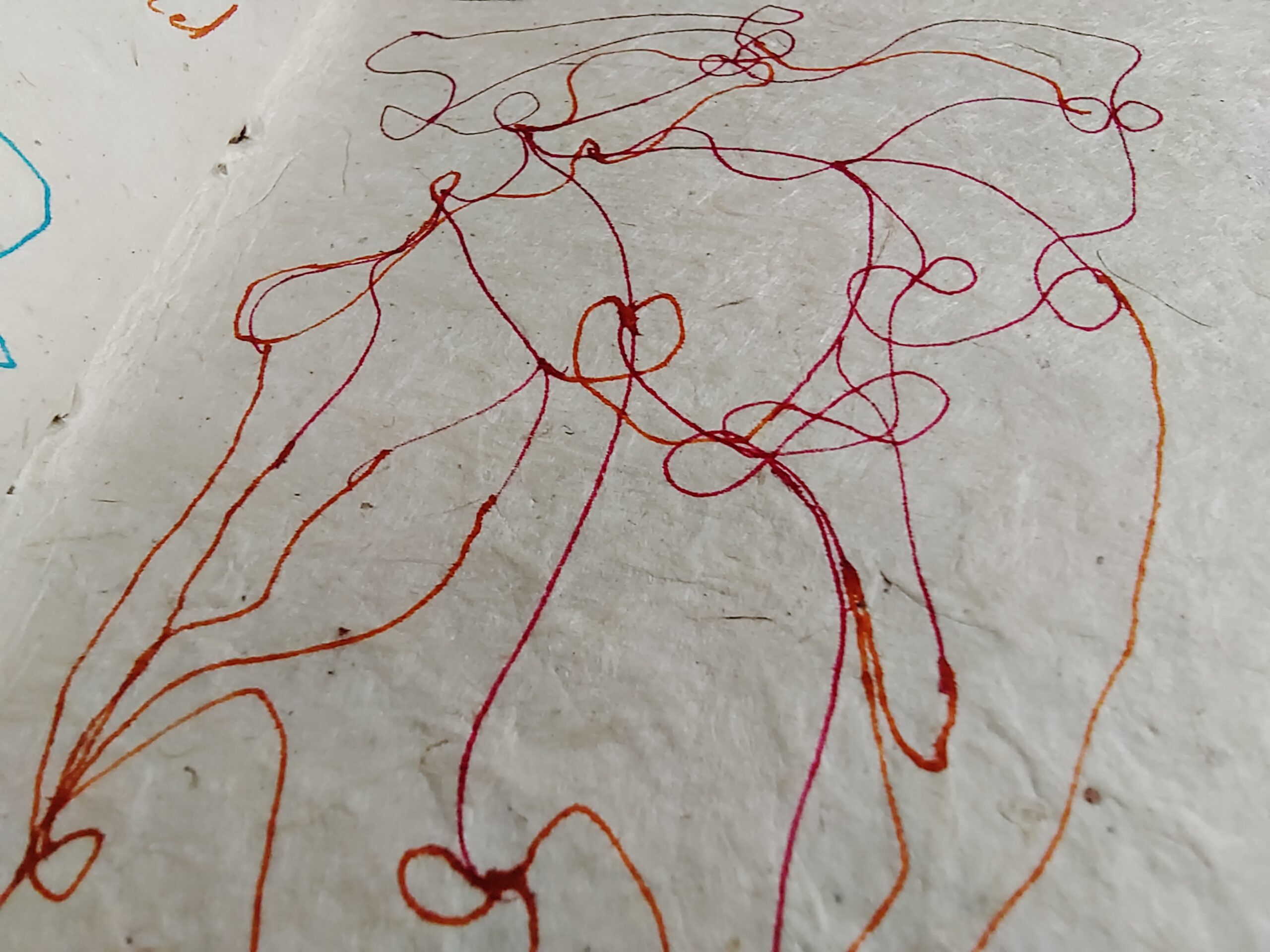
Clavis Metrica started as a kind of a joke, the idea of making a piece that was a sonification of the Icelandic rímur meters, a sketch of a very raw, bare outline of various meters played one after the other. Like a lot of ideas, it started to germinate and take root in my sketch books. Some of my pieces have started as an idea in a sketchbook even a decade before I really start working on them, and that was the case with Clavis Metrica.
Once I knew that I would have a large canvas and very good performers, I could take this idea wherever I wanted. The big question remained of how these meters, so closely associated with words and narrative, would become instrumental music. The piece contains five main sections, roughly speaking: an introduction and four main parts. The criteria for interpreting these meters changes in each of the four main sections, as does as the instrument leading the meter.

After the introduction, the harp leads the main syllable count, with percussion emphasizing alliterations, while the winds hocket in a way that differentiate between strong and weak syllables. At any point where the meter calls for rhyme, they play simultaneously and repeat the interval the next time the same rhyme-ending or syllable appears.
In the second section the percussion leads the syllables, and alliterations and rhyme are stated by the harp and percussion. The winds are merely decorative in this section.
The confusing motive in the winds becomes the driving force of the third section, which behaves similarly to the first, with winds driving the syllables forward and percussion and harp emphasizing rhyme and alliterations.
In the last section the harp pronounces the syllables, while the winds do the alliterations and percussion does the rhyme. This way, we gradually cycle through 20 primary meters and 5-10 variants of each.
At the premiere the audience was handed this Clavis Metrica along with the regular program notes. The Icelandic names of the meters and their variants are highly specific and have no obvious equivalents in any other language, so I haven’t translated them. Google thought that frumbakumsneitt was a “prime rib cut”.
}The Clavis Metrica of Guðmundur Steinn{ – }Click here for Overview{
Introduction
Stuðlafall – samrímað
Stuðlafall – samrímað, mishent
Stuðlafall – samrímað, framhent
Stuðlafall – samrímað, frumframhent, bakhent, kurlað
Stuðlafall – samrímað, frumframhent, bakhent, síðhent
Stuðlafall – skárímað
Stuðlafall – skárímað, frumframsneitt
Stuðlafall – skárímað, frumþrísniðþætt, fimmsneitt
Stuðlafall – frárímað
Stuðlafall – frárímað, framrímað
Vikhent
Vikhent – frumframhent
Vikhent – frumframsneitt
Vikhent – vikframhent
Vikhent – framhent
Vikhent – bakhenduvikað
Vikhent – vikbakhent
Vikhent – vikbaksneitt
Vikhent – vikstiklað
Vikhent – vikstímað
Ferskeytt
Ferskeytt – frumframhent, hálfhent
Ferskeytt – frumsamframhent
Ferskeytt – framhent
Ferskeytt – víxlframhent
Ferskeytt – afhent
Ferskeytt – hályklað, bakhent, fagriháttur
Ferskeytt – fráhent
Ferskeytt – þríkveðið, oddskipt
Ferskeytt – sléttubönd, hringhend
Stikluvik
Stikluvik – sexstiklað, sexþættingur
Stikluvik – sexstiklað, vikframhent, nýstikluvik
Stikluvik – sexstiklað, vikframsneitt
Stikluvik – þríaukrímað
Stikluvik – þrísniðstiklað, stiklusneitt
Stikluvik – þríhent
Stikluvik – þríþráhent
Stikluvik – þríhent, vikframsneitt
Stikluvik – hringhent
Gagaraljóð
Gagaraljóð – frumframhent
Gagaraljóð – framhent, fortaksháttur
Gagaraljóð – bakhent
Gagaraljóð – frumhent
Gagaraljóð – víxlhent
Gagaraljóð – víxlhent, hályklað
Stafhent
Stafhent – framhent, háttabönd
Stafhent – missamframhent
Stafhent – bakhent
Stafhent – framsneitt
Stafhent – misafturbrugðið
Stafhent – misaukrímað
Stafhent – frumstiklað, þríþættingur
Samhent
Samhent – framhent
Samhent – framsneitt
Samhent – frumstiklað
Samhent – frumstiklað, síðframhent
Samhent – frumstiklað, síðsamframhent
Samhent – misaukrímað
Samhent – aukrímað
Stefjahrun
Stefjahrun – frumframhent, vikivakalag
Stefjahrun – frumhent
Stefjahrun – víxlhent
Stefjahrun – hringhent
Stefjahrun – framrímað, svifhent
Stefjahrun – frumstímað
Stefjahrun – samrímað
Valstýft
Valstýft – frumframhent
Valstýft – frumsamframhent
Valstýft – frumframsneitt
Valstýft – hályklað, frumsniðstímað
Valstýft – frumstímað
Valstýft – uppstiklað
Valstýft – frumstiklað, glingurlag
Nýhent
Nýhent – framhent, síðaukrímað
Nýhent – frumbakhent, síðaukrímað, skárímað
Nýhent – hringhent, bakhent
Nýhent – sniðaukrímað
Nýhent – sniðvíxlhent
Nýhent – sniðstímað
Nýhent – fráhent
Breiðhent
Breiðhent – frumhent
Breiðhent – víxlhent
Breiðhent – hringhent
Breiðhent – oddhent
Breiðhent – breiðsamhent, áttstiklað, jafnhent
Breiðhent – breiðsamhent
Breiðhent – breiðsamhent, aukrímað
Langhent
Langhent – frumhent
Langhent – víxlhent, skrúðhent
Langhent – hringhent, velstígandi
Langhent – oddhent, flughent
Langhent – oddhent, síðinnhent, draugalag
Langhent – samrímað, áttstiklað
Draghent
Draghent – frumstiklað
Draghent – frumstiklað, síðbakhent
Draghent – oddhent
Draghent – fráhent
Draghent – fráhent, síðbakhent, veltilag
Draghent – þríkveðið, þrístikla
Skammhent
Skammhent – frumhent
Skammhent – víxlhent
Skammhent – hringhent, glæsilag
Skammhent – oddhent
Skammhent – víslþráhent
Skammhent – frumframhent
Skammhent – síðbakhent
Skammhent – fráhent
Úrkast
Úrkast – frumframhent
Úrkast – frumsamframhent
Úrkast – frumbakhent
Úrkast – síðtvíþætt
Úrkast – víxlasneitt, frumhent
Úrkast – fráhent
Dverghent
Dverghent – frumframhent
Dverghent – síðtvíþætt, glettulag
Dverghent – frumhent
Dverghent – innbrugðið, bragarós
Dverghent – alrímað
Dverghent – frumstiklað
Dverghent – frumstiklað, síðtvíþætt
Dverghent – fráhent, ljúflingsháttur
Braghent – samrímað
Braghent – samrímað, frumframhent
Braghent – samrímað, framhent
Braghent – samrímað, frumframsneitt
Braghent – samrímað, framsneitt
Braghent – samrímað, frumbakhent
Braghent – samrímað, síðbakhent
Braghent – samrímað, bakhent
Braghent – samrímað, frumhent
Braghent – samrímað, samhent, skjálfhent
Afhent
Afhent – frumframhent
Afhent – framhent
Afhent – frumframsneitt
Afhent – framsneitt
Afhent – frumtvíframhent, síðframhent
Afhent – frumtvíframsneitt, síðframsneitt
Afhent – bakhent
Valhent – samrímað
Valhent – samrímað, frumhent
Valhent – skárímað
Valhent – skárímað, sniðsamhent
Valhent – skárímað, síðhent
Valhent – frárímað
Valhent – frárímað, frumþrístiklað, síðstiklað
Valhent – rímvikað
Valhent – rímvikað, framrímvikað
Stúfhent
Stúfhent – framhent
Stúfhent – samframhent
Stúfhent – framsneitt
Stúfhent – samframsneitt
Stúfhent – hringhent
Stúfhent – frumhent
Stúfhent – fimmstiklað
Stúfhent – frumbakumhent
So, 172 stanzas all in all.
The rest has nothing to do with Icelandic poetry other than my obsession with small intervals. The piece uses an animated score (as is usually the case), and each of the musicians sees the whole thing. Electronic sounds are played from the same devices that show the videos (which are never visible to the audience), and during the performance, small electronic loudspeakers are placed under the seats of some of the audience, and some electronic sounds are coming from there and others are coming from similar speakers on the stage.
All of the players use both hands, both feet and their mouth during the performance. Winds use foot rattles and percussionist and harpist play various whistles and in the case of the percussionist, harmonica (retuned). None of them really gets very much of a break for a total of 46 minutes. It is an immensely virtuosic piece despite its calm surface.
About the tuning, the harp is tuned into a just intonation scale, using various proportions deriving from the harmonic series. It uses A flat as the fundamental. The harp pedals are used, but only in the highest and lowest position, as this way I could easily approximate various related pitches (for nerds only: as the major second is the fifth of the fifth or 9/8 with only a total of 3 cent error, which is tolerable). The lower strings of the harp have preparations such as hair clips and bells.

The percussion is mostly non-pitched except for a re-tuned harmonica, which I have become quite proficient at tuning with a nail file over the years (destructive, one-way). Actually, as I was writing this I had this sudden “oops, do I know where this harmonica is at this point?” moment. It took me quite a while to get it just right. Anyhow, the percussionist also uses his feet with two bass drum kickers on (a) a cardboard box and (b) a large temple block.
The woodwinds are playing microtonal approximations of the harp scale and more. Like a lot of my pieces, they read microtonal accidentals of a 36-tone equal temperament (meaning that between each of the notes on a piano there would be two more notes), so lots of notes. Given the abundance of keys on modern woodwind instruments, one can usually find a suitable approximation, but these are by far the most demanding parts I have written using this approach.

The way Clavis Metrica is written is very optimistic (hard to play, that is), but I knew exactly who I was writing for and that the piece would be in capable hands. I therefore felt like I had the dream assignment – large canvas and the best possible materials and people to work with. In a long process like this, a lot of things can go wrong, and even if the piece is technically working out a lot of things can go all sorts of ways in performance, rehearsals, reception, framing, and even advertising/attendance etc. The chances of embarrassment are always great for everyone involved (makes you wonder why anyone does this king of thing in the first place). But more about how it all turned out in the next chapter.